I do not come from a people who need to be taught courage.
I come from a country that has already tested itself against altitude, empire, exile, hunger, earthquake, migration, monarchy, republic, and time. Long before the modern world arrived with pitch decks, algorithms, venture capital, and dashboards, Nepal had already built something harder to build: continuity.
We continued in stone. We continued in ritual. We continued in trade. We continued in language. We continued in memory. We continued in the stubborn refusal to disappear.
So when people ask what young Nepalis can build, I hear the question differently.
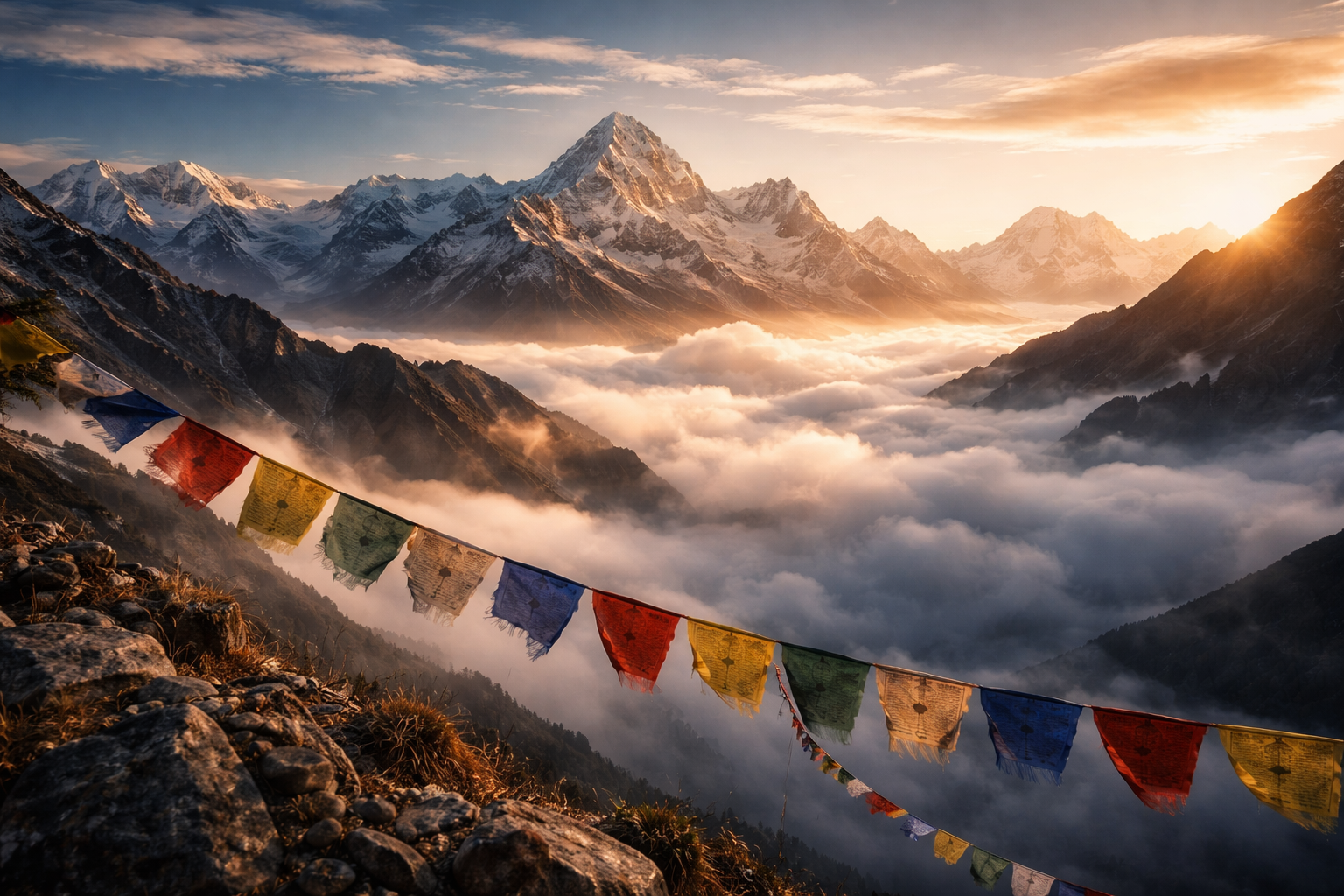
Nepal does not need to prove that it can rise to difficult heights. On 29 May 1953, Tenzing Norgay and Edmund Hillary reached the summit of Sagarmatha, Mount Everest, and the world saw one kind of ascent. But Nepalis already knew another kind: the ascent of generations who carried civilization through hardship without needing applause. (Reuters)
The real question is not whether Nepal can build.
The real question is what Nepal will build now, in the age of systems, software, data, institutions, and digital power.
I carry that question from Dhangadhi.
I spent the first half of my childhood in Nepal’s Far West before moving to Kathmandu in sixth grade. That move introduced me to two different Nepals. One Nepal was shaped by heat, distance, border movement, local memory, and the feeling that the center of power was always somewhere else. The other Nepal was shaped by private schools, competition, technology, urban ambition, and the pressure to become something quickly.
Dhangadhi is often spoken of as a city in the Far West. To me, it is more than that.
Its name is commonly explained through Dhang, linked in local telling to raised land or a platform, and Gadhi, meaning fort. In that reading, Dhangadhi becomes a fortified elevated place. Even if one treats the etymology carefully, the meaning fits the land. Dhangadhi has never been only a settlement. It has been a threshold. A border town. A trading artery. A place shaped by Tharu presence, Doti memory, hill migration, the Indian border, and the slow making of Sudurpashchim’s urban future. Dhangadhi became a municipality in 1976, was upgraded to a sub-metropolitan city on 18 September 2015, and had a population of 198,792 in the 2021 census.
But the political memory of that region goes much deeper.
From the 11th century, western Nepal was shaped by the Khasa Malla world, a Himalayan political order that connected the Karnali region and far western hills to a larger civilizational geography. Krachalla ruled from around 1207 to 1223. Ashok Challa followed from around 1223 to 1287. Inscriptions linked to rulers like Ripu Malla in 1312 and Prithvi Malla in 1356 and 1357 remindus that the Far West was never empty, backward, or waiting to be discovered. It had statecraft, movement, sacred geography, and power.
After that order fragmented, the western hills were remembered through the Baise Rajya, the twenty-two principalities. Doti became one of the important powers in that landscape. Kailali and Dhangadhi later sat inside a wider frontier of hill kingdoms, Terai settlements, forests, trade routes, malaria zones, and border economies.
Then came imperial pressure.
The Anglo-Nepalese War of 1814 to 1816 and the Treaty of Sugauli on 4 March 1816 redrew Nepal’s borders. Kailali, Kanchanpur, Banke, and Bardiya were later returned to Nepal in 1860 as part of what became known as Naya Muluk, after Jung Bahadur Rana supported the British during the Indian uprising of 1857.
That is why Dhangadhi, to me, is not peripheral.
It is a place that understands loss and return.
It knows what it means to stand at the edge of a map and still carry the weight of history.
Inside my home, another kind of structure shaped me.
My father is a residential architect. I watched him spend long hours turning imagination into drawings and drawings into spaces that could stand. I absorbed the lesson before I understood the profession. A house cannot survive on beauty alone. A wall needs measurement. A room needs flow. A foundation needs depth. A roof needs logic. What looks good must also hold.
That became my philosophy long before I called it one.
Today, whether I am thinking about brand systems, product experience, operations, youth programs, sound, or software, I return to the same principle.
Structure first. Expression second. But never ignore either.
For seven generations, as I have heard through family memory, my lineage carried some form of service. First around the royal palace of Bhaktapur, then through movement toward Nepal’s outer frontiers, then through trade, adaptation, and survival. We were not always rulers. We were closer to officials, organizers, people who stood between power and practical life.
I do not treat that as pride for its own sake.
I treat it as responsibility.
The old world had kings. The modern world has systems, institutions, categories, brands, products, networks, and communities. In the past, an official helped maintain order inside a static world. Today, a kingmaker must help create order inside a chaotic one.
That is why the idea of “kingmaker” matters to me.
Not as someone who rules over people.
But as someone who helps others discover the architecture of their own agency.
I do not want young people to depend on my direction. I want them to become strong enough to disagree, build, trade, lead, negotiate, and define their own worth. The highest form of mentorship is not creating followers. It is creating equals.
My official journey with HIDDENLAYER NETWORK began in 2021, during a phase that had nothing glamorous about it. We started with outsourcing and CSR projects. It was not an environment where resources were placed neatly on the table. At our peak in that early phase, we were managing around 15 people and working across seven projects. Some days I was a client relations manager. Some days I was a hiring manager. Some days I was doing SEO analysis. Some days I was coordinating, explaining, fixing, arranging, calming, learning, and improvising. The original profile rightly frames my path through brand experience, operational design, youth infrastructure, product logic, and building without romanticism.
I did not say no because something was new to me.
I said yes because every unfamiliar role opened a door.
That period was small in scale but large in meaning. It taught me that entrepreneurship is not always vision under perfect lighting. Sometimes it is overlapping responsibilities, unclear ownership, tired people, limited resources, and the question nobody can avoid: who will still show up when the structure is not ready?
That is why I do not believe in founder performance.
I believe in foundations.
Brand, to me, is not logo, color, campaign, or polish. Brand is the interface between complexity and trust. Many technical products fail not because they lack capability, but because people cannot understand them, adopt them, believe them, or integrate them into real life. My work sits in that translation layer. If something is powerful but unusable, it is incomplete. If something is beautiful but structurally weak, it is decoration.
Architecture taught me that.
Nepal taught me that harder.
Because Nepal itself is an architecture of contradictions that somehow still stands.
The Kathmandu Valley has carried this lesson for centuries. Nepal Mandala, Nepal Bhasa, Sanskrit, Vajrayana, Sanatan practice, craft, trade, and urban ritual lived together in a way modern identity debates often fail to understand. Rato Machindranath Jatra carries memories tied to the 7th century, rain, drought, King Narendra Deva, Gorakhnath, compassion, and public ritual. Indra Jatra is linked in historical memory to Gunakamadeva and the 10th century, bringing together masked dances, Kumari tradition, ancestor remembrance, monsoon rhythm, and the civic life of Kathmandu.
That is not folklore sitting in the past.
That is society maintaining itself through shared meaning.
By around 1100, the Ranjana script was used to write Sanskrit and Nepal Bhasa. By 1482, after Yaksha Malla’s reign, the old Valley order fragmented into separate kingdoms. In 1564, the Taleju temple in Kathmandu became part of the Malla state ritual. In 1768 and 1769, Prithvi Narayan Shah’s conquest of the Valley reshaped Nepal’s political geography.
Nepal has never been one thing.
It has always been fusion.
Sanatan and Vajrayana. Brahmana and Neva. Khas and Tharu. The Royal Court of King Janak. The Sacrifice of Mother Sita Gorkha and Kathmandu. Dhangadhi and diaspora. Ritual and revolt. Memory and reinvention.
That is why I do not understand Sanatan as a frozen identity. "Sanātana" means eternal, continuous, that which carries forward. But continuity is not rigidity. A living civilization reflects, argues, adapts, and reforms.
That tension became painfully visible under King Mahendra.
Many Nepalis understand the king through sacred imagination. In Nepali samaj traditions, the king was often seen as an avatar of Lord Vishnu. That belief gave monarchy a divine aura. But Nepal was never only obedience. We also come from a civilization of debate, duty, law, and correction.
On 15 December 1960, King Mahendra dismissed Nepal’s elected government and concentrated power in the crown. By 1961, the Panchayat order was being institutionalized. Then, on 22 January 1962, a young Maithil Brahman named Durgananda Jha threw a bomb at King Mahendra’s vehicle near Janaki Mandir in Janakpur. He was opposing the destruction of parliamentary democracy. He was later sentenced after the new Muluki Ain was introduced on 17 August 1963; the old law had not allowed capital punishment for a person of Brahman descent. Durgananda Jha was hanged on 29 January 1964.
I do not tell this story to glorify violence.
I tell it because Nepal has faced existential questions before.
A young man from a Brahman lineage attacked a king many saw as Vishnu’s earthly representative. The state then moved toward a legal principle that punishment could no longer depend on surname. That moment was brutal, complicated, and morally uncomfortable. But history often changes through uncomfortable contradictions.
At its true sense, a Brahman is not someone protected by birth while violating dharma. A Brahman is one who carries knowledge, restraint, and non-harm. A Kshatriya is not someone who dominates. A Kshatriya protects order when order is at risk.
Nepal’s tragedy is that we have often inherited the names without always carrying the discipline.
And yet, we continue.
On 1 June 2001, the royal massacre shattered the monarchy’s moral aura. On 21 November 2006, the Comprehensive Peace Agreement formally ended the civil war. On 23 January 2007, the United Nations mission recognized the scale of Nepal’s peace transition. On 28 May 2008, Nepal declared itself a republic. On 25 April 2015, the earthquake broke homes, temples, roads, and confidence across the country.
Each date asked the same question in a different form.
What holds when the old structure falls?
My generation inherited that question.
And in 2025, we answered it in a language older people did not expect.
The Gen Z protests of September 2025 were not only about a social media ban. They were about corruption, unemployment, nepotism, humiliation, and a nation where young people were tired of being told to wait while the gates of the future stayed locked. Prime Minister K. P. Sharma Oli resigned on 9 September 2025. Sushila Karki, a former chief justice, became interim prime minister on 12 September 2025, after protests that left dozens dead and thousands injured, with elections scheduled for March 2026.
People joke that our generation voted for an interim government on Discord.
They should not laugh too easily.
A generation organizing in Discord is not a meme when institutions stop listening. It is a warning. It is a desperate measure, yes. But desperate measures often reveal the future before formal systems understand it.
I remember that period not as theory, but as heat in the body.
One of our friends was shot around Kalanki. He was taken to the hospital in less than ten minutes. Another friend called soon after and made sure hospital bills would not become another wound on top of the bullet. By the time the news reached me, I had a khukuri in my bag and was standing near Parliament.
I do not write that sentence to sound brave.
I write it because I want to be honest about the speed at which love for country can turn into rage when institutions fail their youth.
That day taught me something important. The test of Gorkha pride is not whether you can carry a blade. The test is whether you can carry restraint when your blood is boiling.
Courage without discipline becomes destruction.
Discipline without courage becomes obedience.
Nepal needs neither blind rage nor passive silence. Nepal needs moral force with structure.
That is what Gorkha pride means to me.
Not costume. Not performance. Not empty aggression. Not a borrowed slogan for diaspora nostalgia.
It is the refusal to be stepped on and the discipline not to become what stepped on you.
When Lil Buddha speaks of
purkhyauli Gorkhali style,
I'm Nepalese
So think about it right before you try to step on me
Purkhyauli Gorkhali paara basinna hepna diye
So if you're born as a Nepalese child
Be proud when you roll with your Nepalese style
I understand why Nepalis feel it in the chest. It is not just rap. It is ancestral memory turned into rhythm. It is the sound of a people saying: we may bend for respect, but we were not born to be humiliated.
That pride also lives quietly in my own home.
I come from a Brahmana and Neva fusion, a world where two different ways of living can meet without destroying each other. My younger sibling does not need to call himself a Brahmana to live with restraint. He eats a vegan diet. He commutes by cycle. He hikes every week. He lives a discipline many people loudly preach but never embody.
That, to me, is living tradition.
Not label.
Practice.
This is why I refuse shallow identity debates. Modern people often reduce Sanatan life into arguments over meat, purity, caste, and slogans. But our civilization was never that small. It reflected. It adapted. It absorbed contradiction. It held many ways of living in one social body, sometimes painfully, sometimes beautifully, but always with the possibility of renewal.
My decision to pursue a B.Sc. in Computer Science through the University of London also came from this instinct. It was not about prestige. It was about fit. I did not see myself fully inside the conventional routes available to me at the time. I wanted a different system, different standards, and a different challenge environment. That choice was not a rejection of Nepal. It was an attempt to prepare myself for the kind of Nepal I believe must come next.
Because Nepal cannot survive the digital century through memory alone.
Heritage without systems becomes nostalgia.
Systems without heritage become imitation.
I want both.
I want software that understands people. I want brand systems that earn trust. I want youth infrastructure that does not simply inspire but equips. I want business models that make service sustainable. I want platforms that reduce friction between ambition and execution. I want young people to gain portable global skills without being spiritually exiled from home.
This is where the idea of kingmaker becomes larger than any single creative reference.
Sound matters to me. Music matters to me. Nepal’s soundscape is far older than any one artist. Temple bells, Deuda songs, Jagar traditions,Jhigiya, festival drums, protest chants, wedding bands, conch shells, mourning songs, and street slogans have always shaped how we remember ourselves.
Sound is emotional architecture.
Brand is emotional architecture.
A nation is emotional architecture.
And if the architecture is dishonest, people feel it before they can explain it.
That is why I believe in making life easier, but not making it free.
COVID taught me that idealism without structure becomes brittle. During the pandemic, workflows collapsed, people were uncertain, and many attempts at uncompensated support met a world too exhausted or unready to receive them. I learned that if service is to last, it must be protected by a business model strong enough to survive.
Free support may look noble for a moment.
Sustainable infrastructure serves longer.
That belief comes partly from my nanna. I remember her quiet, sacrificial love, even when her own feet ached from walking just to buy me snacks. She did not announce sacrifice. She simply served. That kind of love becomes a moral compass if you are paying attention.
I do not want power for decoration.
I do not want status for performance.
I want to build a future where young people do not have to sacrifice health, dignity, confidence, and identity just to survive. I want them to know how to build, trade, communicate, negotiate, design, and stand upright in any room without apologizing for where they come from.
Nepal has spent decades exporting its people.
Students leave. Workers leave. Skilled people leave. Families normalize distance. Remittance keeps households alive, but the emotional cost is rarely counted with the same seriousness as the economic benefit. A country cannot keep exporting its most ambitious young people and then wonder why its institutions feel tired.
But I do not believe in trapping people at home.
My mission is not to tell young people to stay because they have no options. My mission is to equip them so well that they can succeed anywhere and still feel powerful enough to contribute back.
Home is no longer only a coordinate on a map.
Home is agency.
If a young developer, artist, operator, founder, or strategist learns to define their own worth, then the work has begun. Whether they build from Kathmandu, Dhangadhi, Dubai, Sydney, London, or New York, they must not forget that Nepal is not a weakness in their story. It is their operating system.
Globally, the world is being rewritten.
Silicon Valley turned software into scale. Shenzhen turned manufacturing into speed. Bangalore turned technical talent into global infrastructure. Artificial intelligence is now reshaping work, education, creativity, and decision-making. Cross-border payments, language technology, cloud systems, digital identity, and data rights are becoming the new geography of power.
Nepal cannot afford to remain only a romantic place in someone else’s travel story.
We cannot remain only mountains for others to climb, rituals for others to photograph, and young workers for others to employ.
We have already given the world courage.
Now we must give it systems.
We have already carried continuity.
Now we must build institutions.
We have already known sacrifice.
Now we must design dignity.
That is the bridge I am trying to stand on.
Dhangadhi to Kathmandu. Far West to global systems. Gorkha pride to disciplined restraint. Brahmana and Neva fusion to ethical modernity. Discord politics to civic architecture. Brand experience to trust. Sound to memory. Architecture to software. Service to agency.
I do not know how far this journey will go.
But I know what I am trying to build.
Not a louder personal brand.
Not a founder myth.
Not another platform that looks beautiful but collapses under reality.
I am trying to build a working architecture for agency.
A system where young people learn to build, trade, think, serve, communicate, and stand as equals. A system where heritage does not become a museum and technology does not become imitation. A system where Nepal’s old courage finds a new body.
Maybe that is what the modern kingmaker is.
Not the person behind a throne.
Not the person whispering to power.
But the person who turns scattered ambition into structure.
The person who helps the next builder become dangerous in the best sense: difficult to exploit, difficult to silence, difficult to mislead, and too useful to ignore.
And maybe the real question is not who will become king.
Maybe the real question is this:
When the next Nepal is being built, who will know how to make buildings?
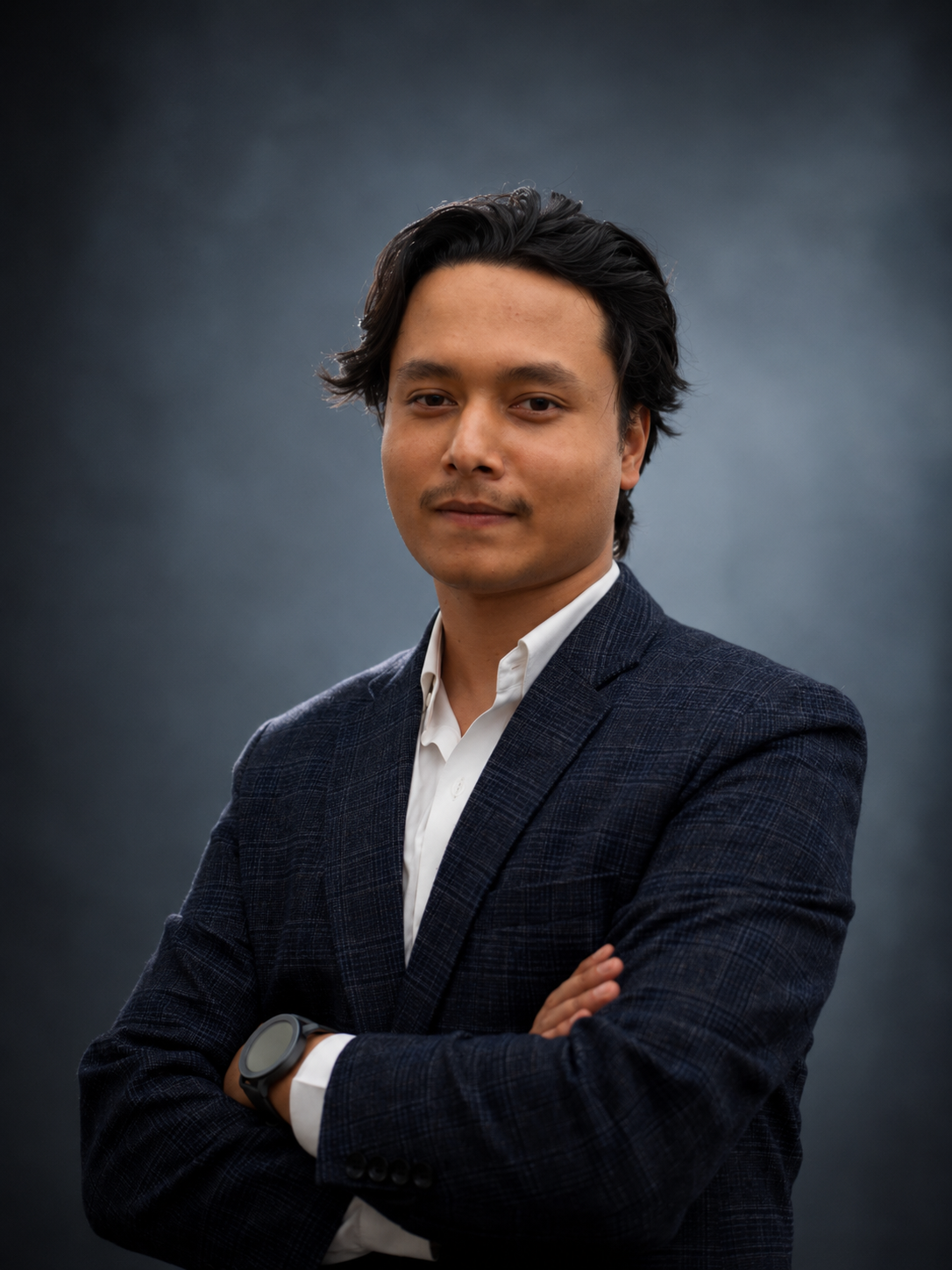
Original RamZ profile, Dhangadhi childhood, father as architect, brand experience, education route, youth systems, kingmaker philosophy, and HiddenLayer journey